Conures
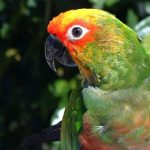
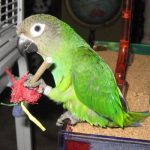
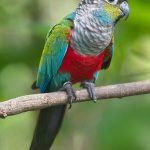
Conures are small to medium-sized members of the parrot family found in Central and South America, with vagrant populations inhabiting certain other places like Washington, Florida, California, and Honolulu. There are several different species of conures, with even more mutations. They are highly popular as pets due to their striking colors and entertaining personalities.

Types of Conures
The birds be identified by their small to medium size, light built, long tails, and strong, little beaks that are usually grey or black in color.

Conure
Different Types of Conures
- Olive-throated Conure
- Deville’s Conure
- Cherry-headed Conure
- White-eared Conure
- Dusky Conure
- Green-cheeked Conure
- Patagonian Conure
- Brown-throated Conure
- Austral Conure
- Maroon-bellied Conure
- Painted Conure
- Caatinga Conure (Cactus Conure)
- Scarlet-fronted Conure
- Mitred Conure
- Maroon-tailed Conure
- Hoffmann’s Conure
- Crimson-bellied Conure
- Red-eared Conure
- Sun Conure
- Jenday Conure
- Gold-capped Conure
- Nanday Conure
- Red-eared Conure
- Blaze-winged Conure
- Pearly Conure
- Venezuelan Conure
- Hellmayr’s Conure
- Rose-fronted Conure
- Grey-breasted Conure
- Pfrimer’s Conure
- Fiery-shouldered Conure
- Santa Marta Conure
- El Oro Conure
- Black-capped Conure
- White-necked Conure
- Brown-breasted Conure
- Rose-crowned Conure
- Yellow-eared Conure
- Golden-plumed Conure
- Slender-billed Conure
- Golden Conure (Queen Of Bavaria Conure)
- Blue-crown Conure
- Half-moon Conure
- Peach-fronted Conure
- Cherry Head Conure
Mutations
The green-cheeked conure has been bred into the most color mutations among all the species. Some of the most popular are pineapple, jade, yellow side, cinnamon, turquoise, and violet. The sun conure has also been bred into a red-factor mutation.

Conure Bird
Mating & Breeding
In the wild, the breeding season usually occurs during mid-to-late summer. The hens lay around 2-8 eggs in a clutch, which are then incubated for 22-28 days.
Lifespan
Conures in captivity usually live for around 20-30 years. Wild conures have a much shorter lifespan.
As Pets
Cage and Housing Requirements
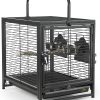
The minimum cage size for conures should be 36x24x24 inches (LxWxH). These active birds love to keep themselves occupied with toys, so there should be plenty of those, both chewable and otherwise. Perches should be provided, ideally, at least one that can help keep your bird’s nails clean and trim. Place the cage in a well-ventilated, draft-free area, preferably in a sound-proofed room (particularly for apartment dwellers).

Conure Cage
General Care Tips
- Clean the cage at least once every week.
- They love a bath, so provide them with a bird bath, take it with you to the shower, or use a mist spray to spritz it with warm water. You may place the cage in a sunny spot afterward so the bird can dry itself in the warmth.
- Wash the food and water dishes in the cage daily to maintain proper hygiene.
- Do a full disinfecting and cleaning of the cage at least once every six months.
- If the perches don’t keep the nails trimmed, do so yourself at regular intervals.
- Clip the feathers regularly. Get professional help to know the right way to do it.

Conure Parrot
Behavior and Temperament
In general, conures are intelligent, curious, and entertaining little parrots.
They are considered the clowns of the parrot world as they can engage in some tomfoolery just to get the attention of their humans. Because of their constant need for attention, the owner should have a couple of hours of interaction with the birds daily. If deprived, they may become cranky (leading to biting) or engage in self-mutilation. They also tend to mirror their owners’ reactions, so if you seem stressed in front of your bird, expect the same kind of temperament from it.
Sounds and Call
One of the downsides of keeping them in a house is their noisy demeanor, which usually reaches a crescendo during dawn and dusk. Being flock birds in the wild, that is the time they make most of the noise to communicate with each other.
Can conures talk: Although not as well as some other members of the parrot family, conures can indeed hold their own when it comes to mimicry. Species like the half-moon, cherry-headed, and white-eyed conures are better choices if you intend to train your bird to talk. Males are usually better at picking up new words than females.

Conure Pictures
General Training Tips
- Always be patient while training your conure. Yelling or using negative reinforcement techniques will not get you far. On the other hand, rewarding a trick well learned with a treat or two can certainly go a long way.
- Be the best friend to your bird. Having that kind of camaraderie with the bird encourages it to pick up on a trick much quicker.
Diet
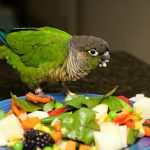
Your conure can eat vegetables like pumpkin, potato, carrot, cauliflower, cabbage, beet, and broccoli. Kale, parsley, cilantro, and mustard are also good choices. As a source of protein, you can offer some chicken or salmon. Walnuts, cashew nuts, and almonds can also be fed.
Among fruits, conures can safely eat bananas, oranges, mangoes, apples, cranberry, and papaya. Avocado, guacamole, and chocolate can be harmful.

Conure Birds
Health Problems
A well-balanced diet, draft-free surroundings, and regular visits to a vet can ensure that most health issues are kept at bay. Conures may suffer from Psittacine beak and feather disease, psittacosis, proventricular dilation disease, feather plucking, and aspergillosis. Some of the telltale signs to look out for are:
- Lethargy
- Weight loss
- Breathing difficulty
- Diarrhea
Price
Depending on the availability of the species, these birds can cost anything between USD 150 to USD 800.

Pictures of Conure Bird
Interesting Facts
- The protagonist of the 1998 animated movie Paulie, is a blue-crowned conure.
- The only species found outside Latin America, the Carolina conure, went extinct in 1939.
- The American Ornithologists’ Union prefers to use the term ‘parakeet’ for these birds, unlike the rest of the world, which refers to them as ‘conure’.
- The Patagonian species is the largest among conures.