

Domestic canary, commonly referred to just as canary, is the domesticated variety of wild canary, the small bird of the finch family native to the Macaronesian Islands. The first domestic canaries were brought to Europe by Spanish sailors, who bred the birds in captivity during the 17th century. These fashionable, expensive canaries were originally bred only in the royal courts of England and Spain, with the monks, breeding these birds selling only the cocks to prevent others from breeding them. Finally, the Italians managed to obtain hens and started breeding the canaries.

Domestic Canary
Scientific Classification |
|
| Kingdom | Animalia |
| Phylum | Chordata |
| Class | Aves |
| Order | Passeriformes |
| Family | Fringillidae |
| Genus | Serinus |
| Species | S. canaria |
| Scientific Name | Serinus canaria domestica |

Domestic Canary Pictures
Quick Information |
|
| Other Names | German Roller, Spanish Timbrado, Australian Plainhead, Waterslager |
| Size | 12-20 cm (4.75-8 inches) in length |
| Weight | 12-30 g (0.4-1 oz) |
| Color | Red, white, black, brown, orange, yellow |
| Distribution | Throughout the world; the ancestors were distributed in the Madeira, Azores, and Canary Islands |
| Habitat | Kept as pets throughout the world |
| Song | Different types including rolling, trilled, loud, soft |
| Clutch | 4-7 Eggs |
| Brooding time | 12-14 days from incubation |
| Fledging | 14 days of age |
| Lifespan | 5-10 years |
| Sexual Maturity | Less than 1 year of age |
| Diet | Seeds of figs, grasses, weeds; other plant materials; small insects |
| Conservation Status | Domesticated |

Domestic Canary Images

Domestic Canary Photos
Varieties
The domestic canaries are mainly classified into three groups:
- Song canaries: Specific song patterns are exhibited by this group of birds, which includes Persian Singer, Russian Singer, American Singer, Harz Roller, etc.
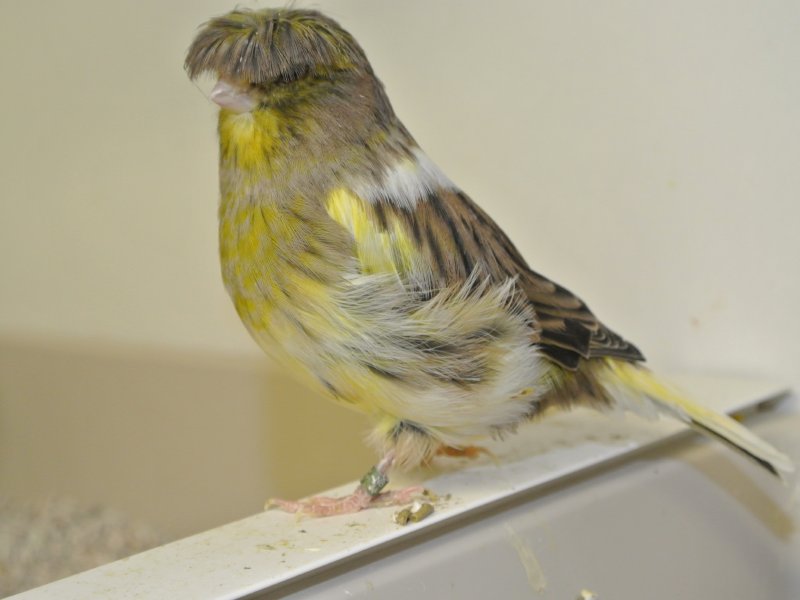
- Type canaries: Characterized with different conformation and shape, this group includes Yorkshire canary, Stafford canary, Parisian canary, Lizard canary, Gloster canary, Gibber Italicus canary, Fife canary, Border canary, etc.
- Color-bred canaries: Different color mutations including red factor, brown, mosaic, onyx, ivory, bronze, etc are observed.

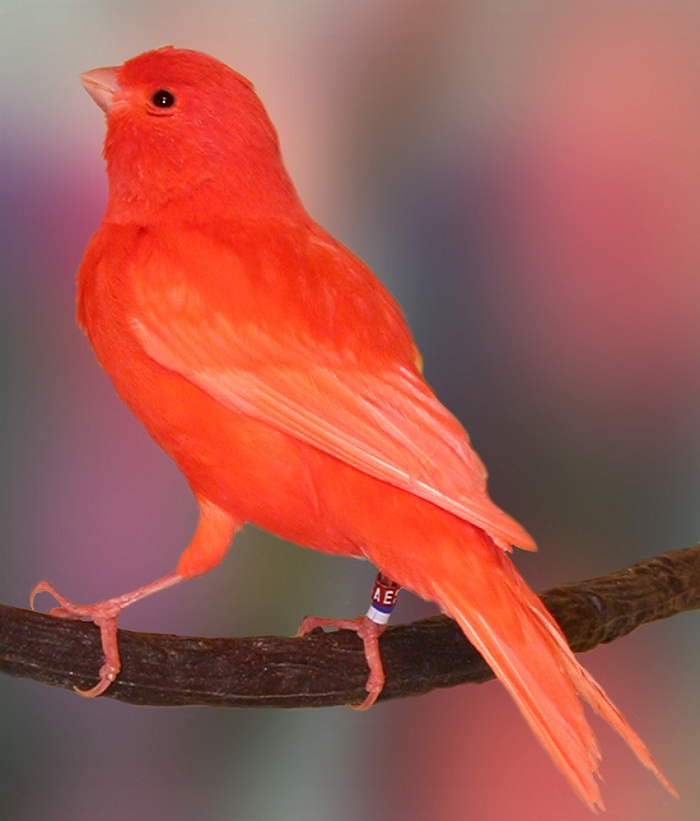
Red Domestic Canary

White Domestic Canary

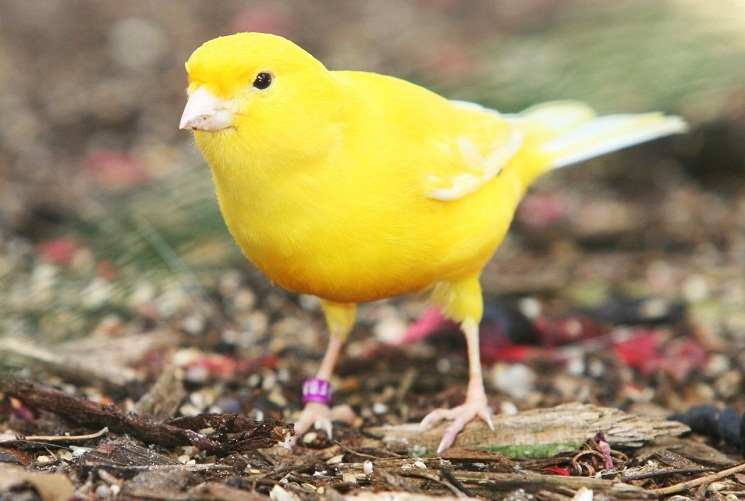
Yellow Domestic Canary
Pet care
These attractive, cheerful birds can be ideal companions for those who like watching birds. They are not demanding as pets, being suitable for first-time bird owners.
Cage setup
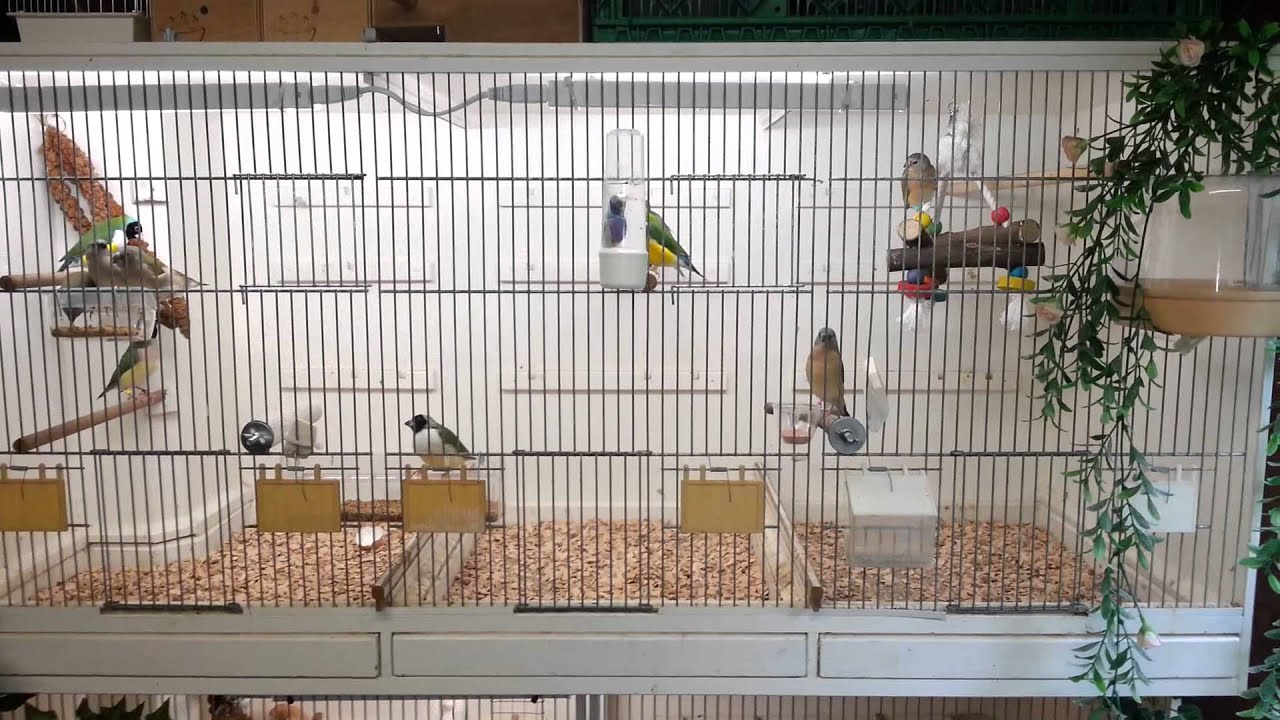
Since domestic canaries prefer wide open spaces, a canary pair should be kept in a spacious canary cage measuring at least 50 cm (20 inches) in width and length. Keeping some tree branches or softwood perches, having diameter of 0.3-0.75 inches, helps them in wearing their claws down naturally. The cage can be placed at a height of 6 feet from the floor or hung from wall brackets. The birds can also be kept in roomy indoor/outdoor aviaries or bird rooms depending on the area.

Domestic Canary Cage Setup
Nest
A wicker nest or a nesting pan made of earthenware, metal, or ceramic can be mounted inside the cage, giving the birds a perfect breeding environment. The birds also accept nesting materials like tissue paper, burlap, cotton wool, plumber’s hemp, hessian, corn cob bedding, and soft wood shavings to construct their nests.

Domestic Canary Nest
Temperature
The canaries do well when temperatures range between 60°F-85°F. Their aviaries and flight cages should be kept in places where they can get plenty of fresh air and light.
Temperament
Although they are non-aggressive and social by nature when kept in aviaries, they might fight occasionally with aggressive co-habitants like hookbills, lovebirds, and parakeets. When kept in cages, they could become quite territorial, which is why two male canaries should not be paired up in the same cage.

Domestic Canary Birds
Feeding
Appropriate nutrition that includes cuttlefish bone, liquid vitamin drops, fresh greens (like Brussels sprouts, dandelion, chickweed), seedy grass heads, fruits, vegetables (apple, carrot, broccoli) and soft food recipes (having ingredients like biscuit crumbs, bread crumbs, gelatin, and hardboiled egg) is essential for their health.

Domestic Canary Eggs

Domestic Canary Chicks
Exercise
Plenty of movement in their aviaries or flight cages is of prime importance to their well being and health. Cage accessories like branches, mirrors, and toys should be kept to minimum so that the canaries can move freely.
Bathing
Domestic canaries prefer to bathe quite often, especially during their molt. Provide a container with fresh cold water, which is useful for improving their feather condition. Avoid warm water as it removes essential oils from their feathers.

Domestic Canary Bathing
Health problems
These birds have delicate respiratory systems, which make them vulnerable to toxic gases like carbon dioxide, methane, and carbon monoxide. Cooking fumes, aerosol sprays (air freshener, polish, deodorants), and smoke from cigarettes are hazardous as well. Common illnesses likely to affect them include diarrhea, constipation, tumors, sore eyes, scaly legs, baldness, egg binding, heat stroke, and weight loss.
Price
A domestic canary costs around $140-$200.
Interesting facts
- Canaries were previously used by miners as a warning system. Any sign of suffering from the bird pointed out that the mines were unsafe.
- Apart from being used as model species in research for studying the learning mechanism, memory integration, and birth of neurons in vertebrate brain, the canaries are studied for understanding how songbirds create and encode songs.
- When spring approaches, the hens exhibit more rounded abdomens, while the cocks have downward protruding and larger abdomen.


Hello!!! My name is Lena. I live in Calvignasco.
I have read this blog post about Domestic Canary | Singing Wings
Aviary and want to thank you for such an informative article.