

European goldfinch, or simply goldfinch, is a small beautiful bird of the finch family, originating from Europe. Goldfinches are characterized with a long, pointed beak for extracting seeds from teasels and searching thistle blossoms. Both the male and female goldfinches appear quite similar, but on close assessment, males can be distinguished by their larger darker masks extending behind the eye. During their breeding season, European goldfinches sport an all-white beak, without the blackish or grayish spot at the tip.

European Goldfinch
Scientific Classification |
|
| Kingdom | Animalia |
| Phylum | Chordata |
| Class | Aves |
| Order | Passeriformes |
| Family | Fringillidae |
| Genus | Carduelis |
| Scientific Name | Carduelis carduelis |

European Goldfinch Pictures
Quick Information |
|
| Other Names | Gray-crowned Goldfinch, Eurasian Goldfinch, Eastern Goldfinch, British Goldfinch |
| Size | 12-13.5 cm (4.7-5.3 inches) in length |
| Weight | 14-19 g (0.49-0.67 oz) |
| Wingspan | 21-25.5 cm |
| Color | Red throat and forehead; white underside, lower neck, and cheeks; black nape and back of head; black wings and tail with yellow markings on the wings and white markings on the tail; plain head, grayer back with yellow wing stripes in juveniles |
| Distribution | South central and western Asia, North Africa, and Europe; introduced in New Zealand and Australia in the nineteenth century |
| Habitat | Partially wooded open lowlands, gardens, parks, grasslands, and orchards; migrates to warmer regions |
| Song | Pleasant combination of twitters and trills with a teLLIT-teLLIT-teLLIT call phrase; their call is a sweet tickeLIT |
| Clutch | 4-6 Eggs |
| Brooding time | 13 days from incubation |
| Fledging | 14 days of age |
| Lifespan | 8-12 years |
| Diet | Feed on green food, thistle seeds, and occasionally on insects |
| IUCN Conservation Status | Least Concern |
Groups
The goldfinch species is classified into two groups, each including multiple races:
- Carduelis carduelis carduelis includes carduelis niediecki, C. carduelis britannica, C. carduelis loudoni, C. carduelis balcanica, C. carduelis parva, etc.
- Carduelis carduelis caniceps includes carduelis subulata, C. carduelis paropanisi, and C. carduelis caniceps.

European Goldfinch Images
Mutations
These birds can have several variations including albino, opal, yellow, satin, pastel, agate, and tawny.
Pet Care
Although goldfinches can be easily cared for, they require special attention during the breeding season. These are not ideal as a companion bird, but they are a common choice for those who love watching birds.
Cage Setup
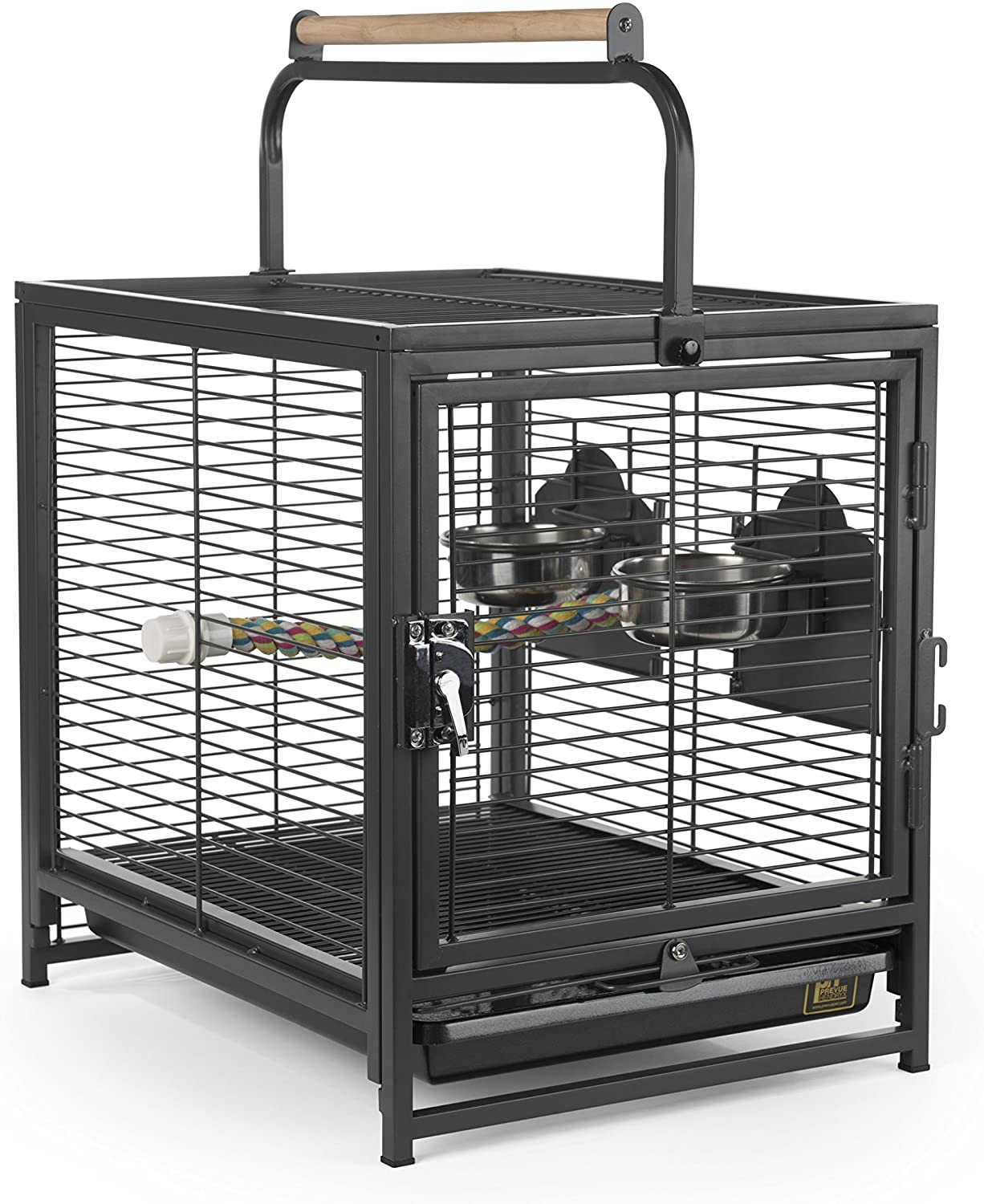
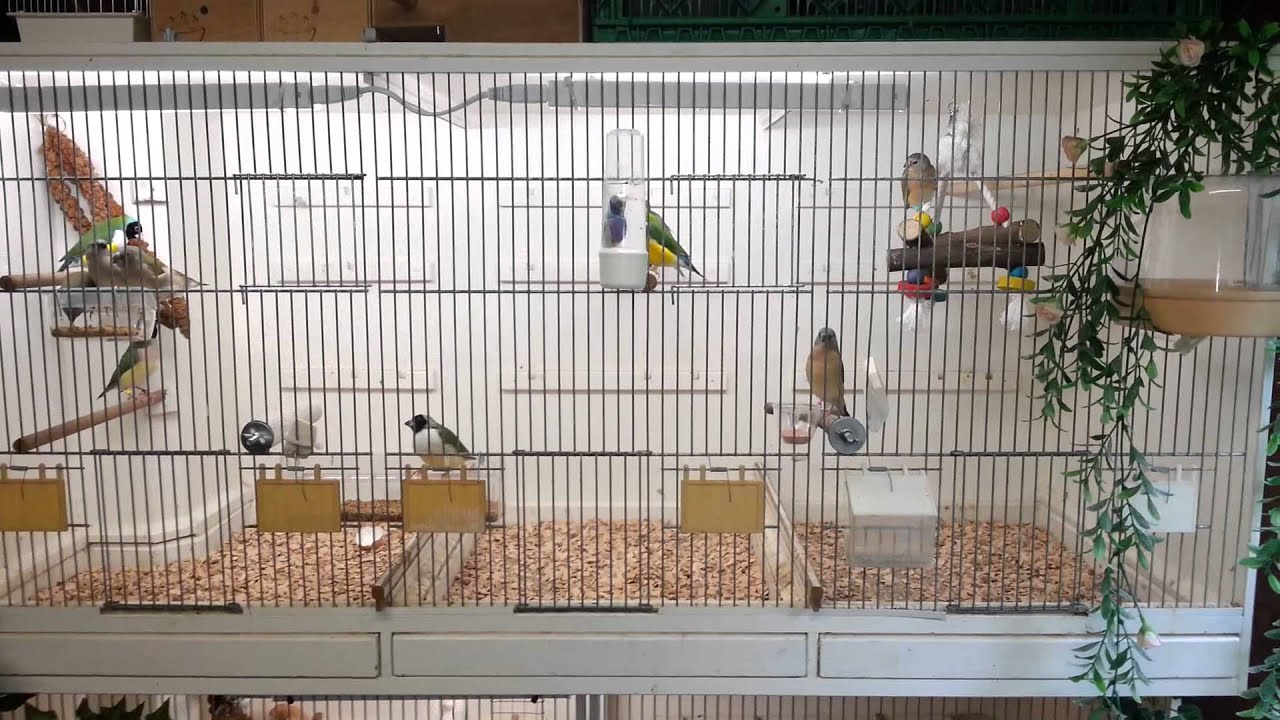
European goldfinches should be housed in spacious flight cages and planted aviaries. For a pair, the size of the enclosure should be at least 30cm X 5cm. The enclosure could be hung from wall or kept at eye level, off the ground in a place with plenty of sunlight and fresh air. Provide some softwood perches, measuring about 0.7 inches in diameter, inside the cage.

European Goldfinch in Cage
Nest
A canary nest or a nesting cup can be placed in the enclosure, providing a suitable place for hiding and breeding. They accept nesting materials including long grasses, wool, colored feathers, and tissue paper to build nests for incubating their eggs.

European Goldfinch Nest
Temperature
They do well when kept at normal household temperatures, but sudden fluctuations in temperature should be avoided. During winter, the flight cages should be kept indoors to protect them from intense cold.
Temperament
European goldfinches get along well with birds of their own species but may become aggressive towards other species. They should be kept in pairs or with similar-sized birds when bred in mixed aviaries.

European Goldfinch Birds

European Goldfinch Photos
Feeding
These finches should be provided with a diet containing a combination of grass seeds, cereal seeds, green food, millets, and live food. Germinated or sprouted seeds containing plenty of minerals, vitamins, and proteins should be given to molting or breeding birds. Good quality commercial seed mixtures containing thistle mix can also be provided.

European Goldfinch Eggs

European Goldfinch Chicks
Exercise
Since they love to move around in their cage, adequate space should be provided by removing unwanted accessories in their enclosures. Flying from one perch to the other helps them to burn energy and maintain proper metabolic rate.
Bathing
To maintain their beautiful, healthy plumage, goldfinches should be provided with a shallow dish of fresh bathing water.
Health Problems
Being a hardy species, goldfinches are not affected by common illnesses. However, the birds are occasionally affected by a disease caused by scaly leg mites. Some other health issues observed in them include swollen red eyes, nasal or eye discharge, beak swelling, and plucked, fluffed or soiled feathers.
Price
$80-$100 is what you’ll be lighter by after you get yourself a goldfinch.

European Goldfinch Flying

Flying European Goldfinch
Interesting Facts
- These finches are attracted to birdfeeders consisting of niger seeds, in the backyards of North America and Europe.
- European goldfinches are hybridized with canaries to produce a singing bird with goldfinch’s melody and canary’s vocal power.
- Since goldfinches prefer to feed on thistle seeds, they are associated with Christ’s Passion as well as crown of thorns in Christian symbolism.
- The bird has been depicted in various literary and art works including a Concerto for flute by Antonio Vivaldi, a poem by John Keats, Patrick Kavanagh’s “The Great Hunger”, and “The Goldfinch” by Donna Tartt.
Just seen one of these birds outside my kitchen window.. Here in Basingstoke Hampshire RG24
It was a Europeon Goldfinch